 Oxytocin-Learning
The Echo House
For young people aged 11 to 18, from the move up to secondary school onwards, and the grown-ups who love them. A place to read the world around you, the group chat, the corridor, the feed, the team, and come away prouder of who you are and closer to the people at home.
The children are the future
Many people who work in the NHS are parents. Their children meet the same encounters their parents meet, and they carry what their parents carry home: the long shifts, the things said on the ward, the things left unsaid. It shapes their lives, and it shapes how they learn. It starts early: at 11, the move up to secondary school brings bigger problems, from other pupils and sometimes from the school system itself.
They are the ones holding the flag for tomorrow. Oxytocin Joy of Learning is for them, and it is built the Oxytocin way: fun, loving and caring. No lectures. Music, food, stories and making things, with the truth told kindly and nobody left to work it out alone.
The Echo House is named for how one word, one post or one moment echoes through a family, a school and a community. Young people already hear more than adults think. Here, they get the words for it, and choose what they send back.
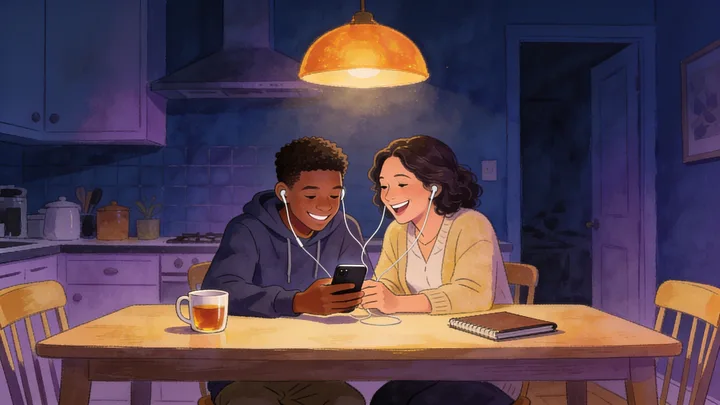

Meet Kwame
Kwame is 21, at university, and grew up between two cultures. He is the older cousin everybody wishes they had: funny, honest, unbothered by awkward questions, and never preachy. He tells the stories in every room.
Kwame is written and voiced by people. No AI ever talks to a young person here.
Meet Zara and Imani
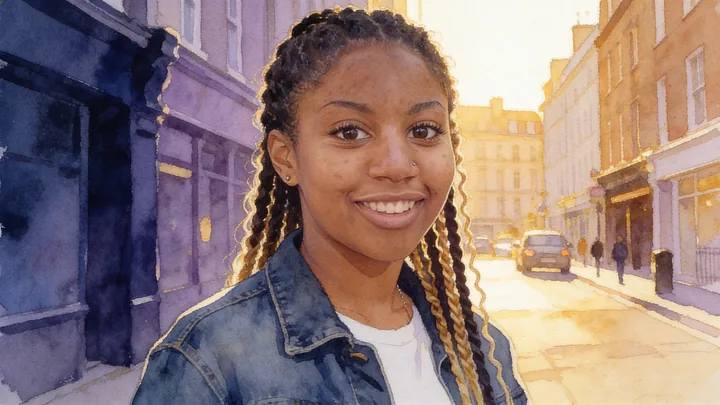
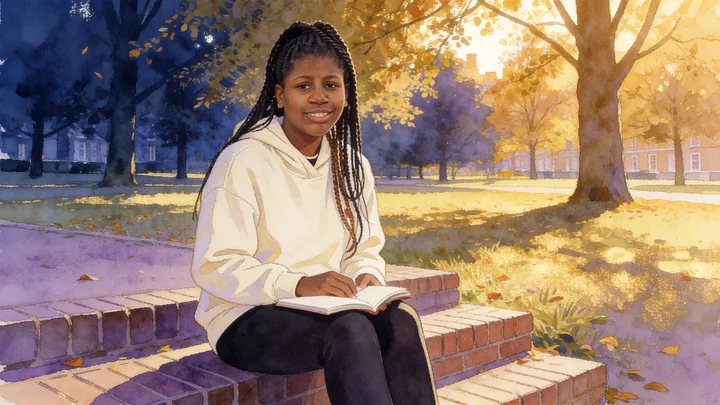
Zara is 15 and Imani is 13. They are sisters, and they are first through the door of every room. Zara says what everyone else in the room was thinking. Imani notices what everyone else missed, and writes it down.
They do not need things explained twice, and they will tell you straight what was worth your time. Like Kwame, they are characters, written by people.
Twelve rooms, three movements
See · Rooms 1 to 4
Reading what is really going on
The group chat, the corridor, the feed, and the music that tells your story.
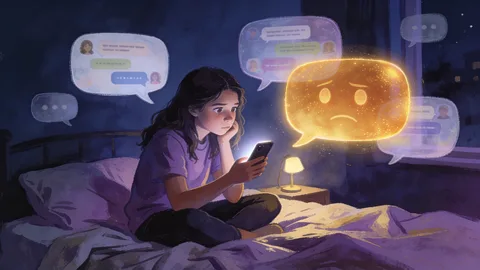 Room 1The Signal
 Room 2The Corridor
 Room 3The Feed
 Room 4Your Sound
Connect · Rooms 5 to 8
Bringing it home
One incident, three accounts; a card for home; your name and your family's stories; a dish to cook together.
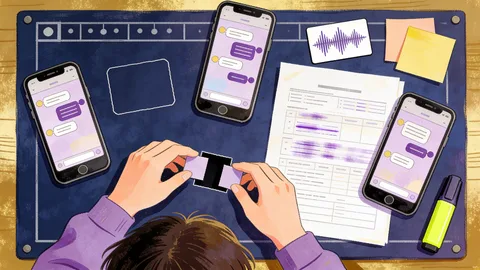 Room 5The Case File
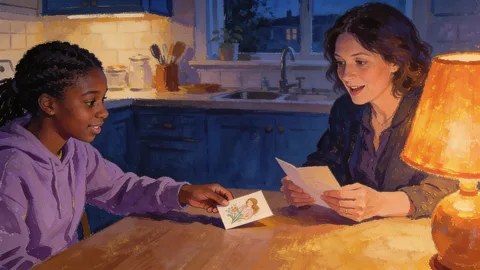 Room 6The Handover
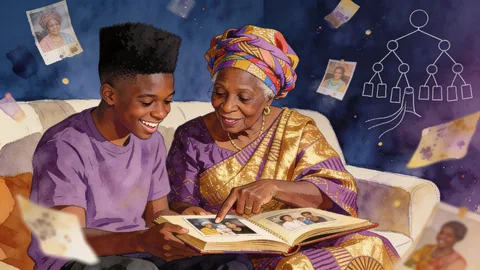 Room 7Names and Stories
 Room 8The Kitchen
Become · Rooms 9 to 12
Changing the culture you are part of
Calling in, the team, making something of your own, and a gathering to share it.
 Room 9Calling In
 Room 10The Team
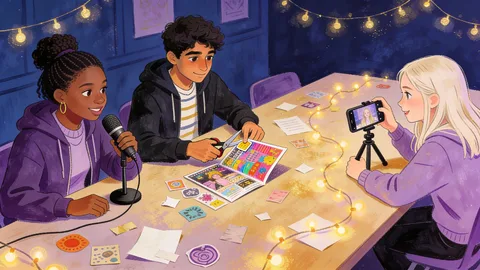 Room 11Make Something
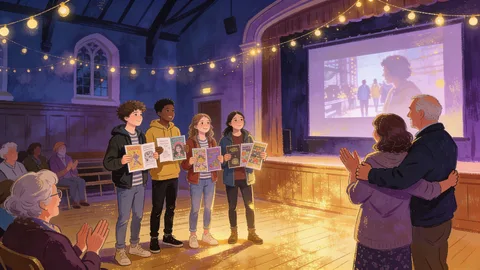 Room 12The Gathering
Inside a room
About twenty minutes, one a week. No streaks, no scores, no right answers to guess.
The story
Kwame tells it, with illustration and sound, set in a world you recognise: school, the group chat, sport, gaming, home.
The evidence table
Look at the pieces, the messages, the posts, the notes, and mark what is there and what is missing.
The take-away
Something to do off the screen: a conversation, a song, a recipe, or a thing to make.
Three of the twelve rooms are pure celebration: music, food and making. Every few weeks, joy is the whole point.
A space for parents, alongside
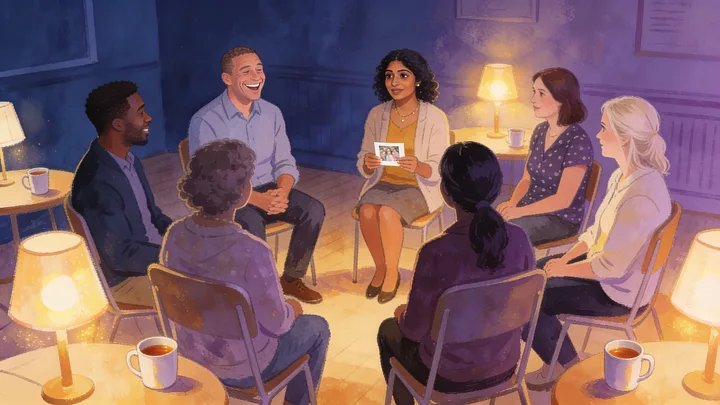
While your child moves through the rooms, you have six circles of your own, one every fortnight, matched to what they are meeting. Ava, the guide many of you know from Phoenix Rising, opens each one.
Signals at home. The first thirty seconds, when your child tells you something hard. Watering cans, not pruning shears. Talking about race with young people. School and the systems around it. And the gathering, where you meet their work with pride.
Some evenings your child may send you a card from a room: I looked at this today. I don't want a lecture. Just read it. You will have practised for exactly that moment.
A free guide for parents
The first thirty seconds: what to do in the moment your child tells you something hard. Six pages, about ten minutes to read, from the second of our parents' circles.
Here is your guide.
We ask only for your name and email, never anything about your child, and use your email only to write to you about Joy of Learning.
What a place holds
- Twelve rooms for your child, one a week, on any device
- Six parents' circles, online, with a short film from Ava in each
- A pack in the post: the parents' response cards, handover cards, a zine-making kit and a recipe card
- A calm step-out button in every room, with real support a tap away
- Sound, music, movement and pauses that can each be turned off, and captions on everything
- What your child writes stays with them unless they choose to share it
Oxytocin Joy of Learning is safe by design for under-18s: the account is set up by a parent, no AI talks to a young person, and nothing a young person does is used to profile them. Our safeguarding lead is Paulene Samuels, Programme Manager.
For teachers and youth groups
Bring The Echo House to your school, class or youth group as The Common Room: sessions drawn from the twelve rooms, run in person with printed scenario cards, and built for a group to work through together.
Every in-person session is run by facilitators holding an enhanced DBS check, with our safeguarding lead or a named deputy present. Group prices and dates are agreed with each school or group.
Tell us about your school or group, and we will come back to you with a group price.
Reserve a founding place
£79
Per family, for the whole journey: twelve rooms, six parents' circles and the pack in the post.
Founding price until 31 December 2026. From 1 January 2027 the standard price of £149 applies.
Your family's place is reserved.
Thank you. You will hear first when the opening date is set, and your family keeps the £79 price.
Reserving asks only for your name and email, never anything about your child. No payment is taken today: you are told the opening date first, and secure your place at £79 then.
We use your email only to write to you about Joy of Learning. Our privacy notice.